 Maison Keïta
The history of perfume, era by era
Five thousand years of perfume, from resins burned in Egyptian temples to synthetic molecules. Each era has its materials, its gestures and its places; each leads to its articles, published or coming soon.
Dates are landmarks. When a story belongs to legend, we say so.
Read the full history: from its origins to today, in eleven stages
about 3000 – 30 BCE
Egypt and Mesopotamia
The first perfumes were burned or spread on the skin: resins, oils and unguents served the gods, the dead and the living. At the banquets of Thebes, around 1400 BCE, guests are painted adorned and perfumed. Kyphi, a blend of resins, wine and honey burned in temples, is described by several ancient authors.
Articles
- Perfume in ancient Egypt: kyphi and unguents
- Coming soonTapputi, perfumer of Mesopotamia: what the tablet says
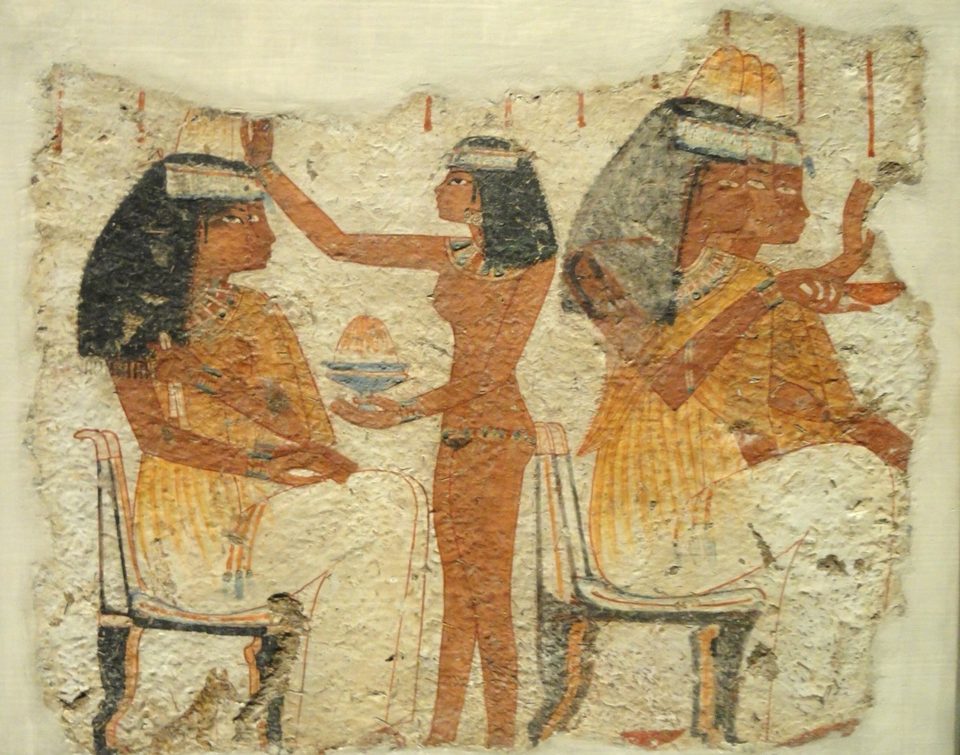
Banquet scene, Thebes, New Kingdom, about 1400 BCE. Nelson-Atkins Museum of Art. 1st millennium BCE
Arabia and the incense route
Frankincense from Dhofar and Hadramawt, and myrrh from the shores of the Red Sea, travel by caravan to the Mediterranean. These resins were among the most expensive goods of Antiquity.
Articles
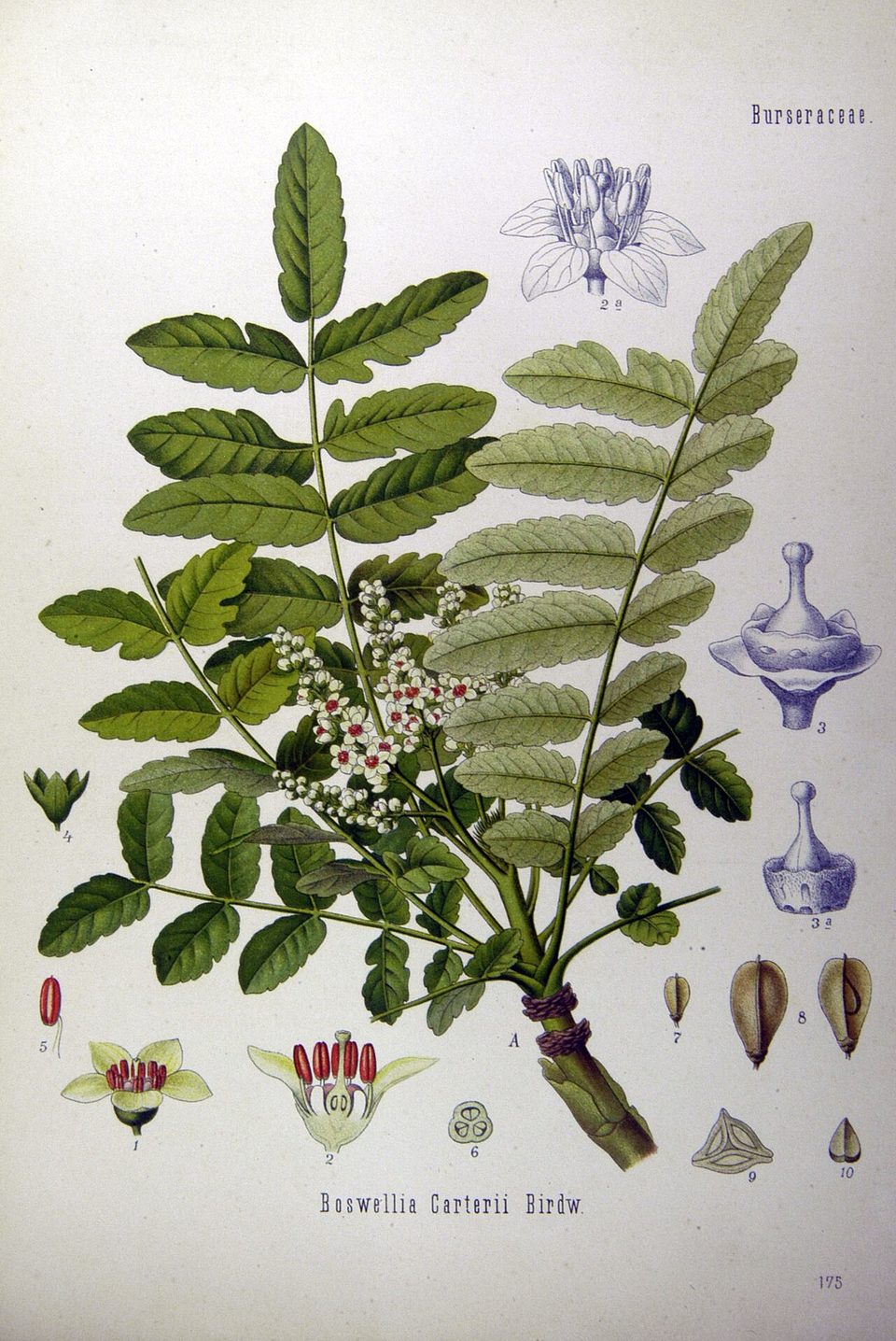
Boswellia carterii, the frankincense tree, Köhler’s Medizinal-Pflanzen. 8th c. BCE – 5th c. CE
Greece and Rome
The Greeks, then the Romans, perfume bodies, baths and feasts. Blown glass, which appeared in the 1st century BCE on the Syro-Palestinian coast, multiplies small perfume flasks.
Articles
- Coming soonPerfume in Rome, from the baths to the banquets
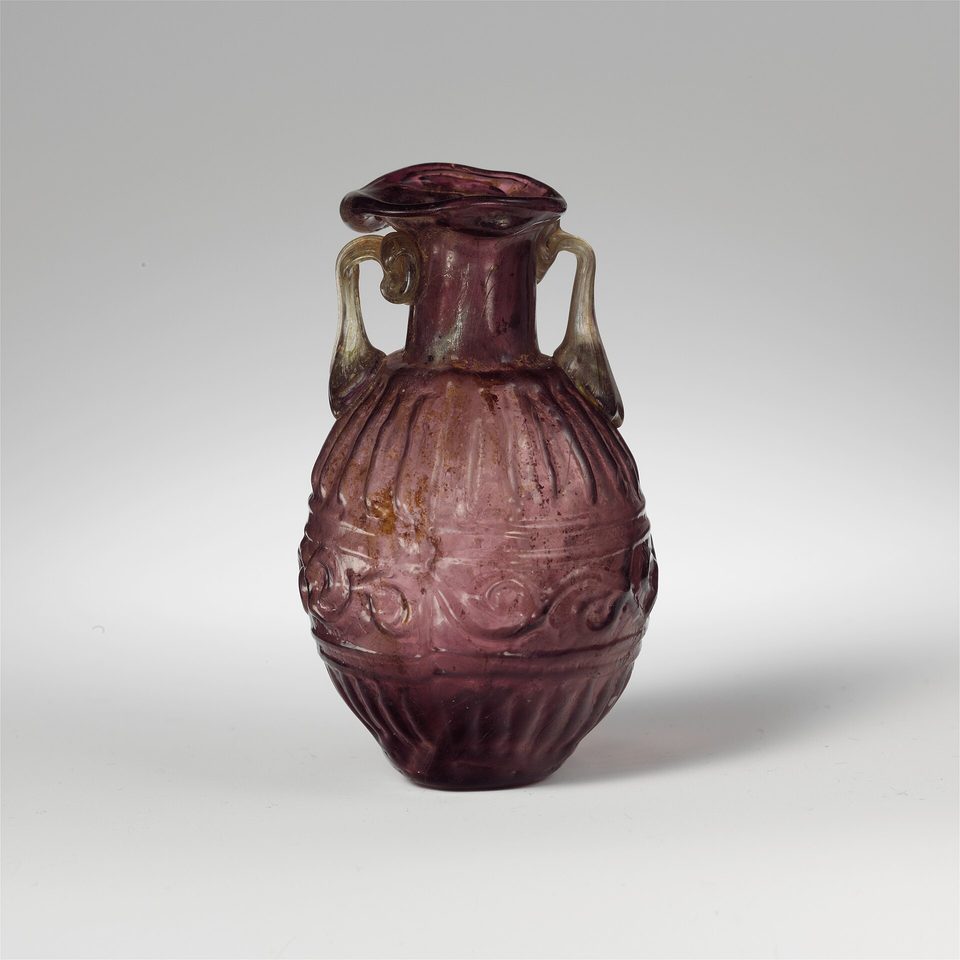
Glass amphoriskos (perfume flask), Roman, Syria. 8th – 13th century
Baghdad, Persia and rose water
Scholars of the Islamic world refine distillation. In the 9th century, al-Kindi describes dozens of recipes for perfumes and aromatic waters. Ibn Sina is often presented as the inventor of distillation: that is a legend, the still is older.
Articles
- The Rose of Taif: Queen of Rare Ingredients
- Coming soonIbn Sina and rose water: legend and facts
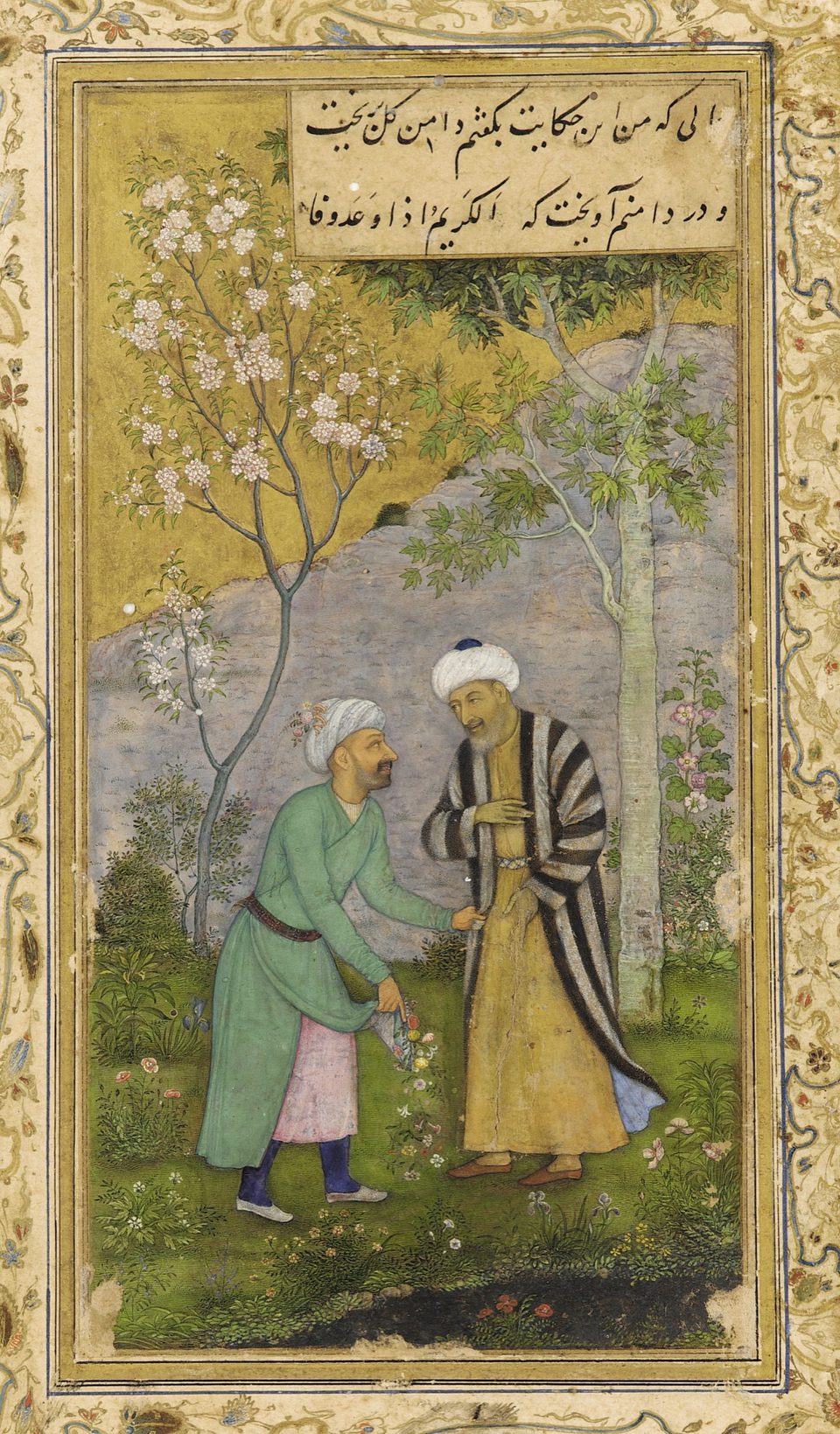
Saadi in a rose garden, attributed to Govardhan, Mughal album page, 17th century. 6th – 16th century
India, China and Japan
Agarwood and sandalwood travel from South-East Asia to India, China and Japan. In Japan, kōdō, “the way of incense”, is codified in the Muromachi period: one “listens” to agarwood. In India, Kannauj distils its attars onto sandalwood.
Articles
- Oud: The Black Gold of Oriental Perfumery
- The Olfactory Journey: From the Souks of Marrakech to the Forests of Kyoto
- Sandalwood: From Mysore to Australia, and the Share of Synthetics
- Coming soonKōdō, the way of incense
- Coming soonKannauj, city of attars
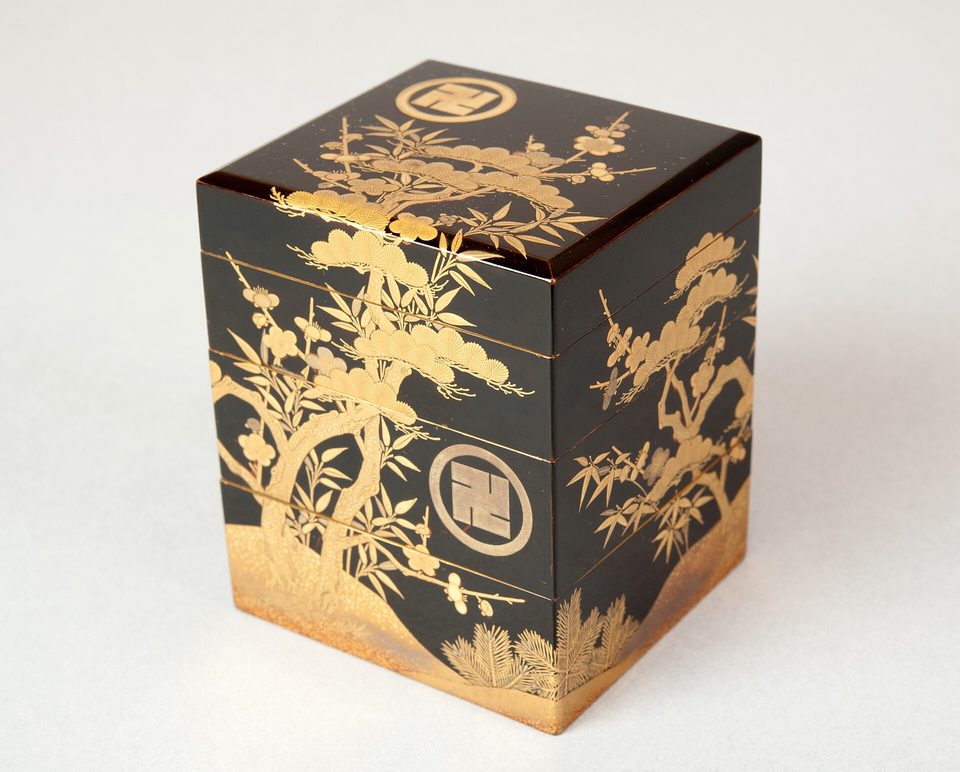
Tiered incense box (jūkōgō), gold lacquer, Japan. 16th – 18th century
Grasse, Cologne and Versailles
In Grasse, glovers perfume their leather; in 1724, the guild of glover-perfumers adopts its own statutes there. In 1709, Jean-Marie Farina (Johann Maria Farina) settles in Cologne, where the citrus water that gave eau de Cologne its name is born.
1868 – 1921
Chemistry invents new scents
In 1868, William Perkin synthesises coumarin. Guerlain uses it in Jicky in 1889; Coty creates Chypre in 1917; Chanel launches No. 5 in 1921, with a large dose of aldehydes.
Articles
- How to Read a Fragrance Pyramid
- Coming soonThe molecules that changed perfume
1970s to today
Niche perfumery and memory
Independent creators break with mass-market perfumery; the word “niche” takes hold in the 1990s. 1990 also sees the birth of the Osmothèque, the international perfume conservatory, based since 2025 at 8 rue Saint-Simon, Versailles.


